Samsung Wallet is adding USDC, the dollar stablecoin, for eligible Galaxy users in the US starting in the last week of October 2026, according to Samsung's announcement of October 7, 2026. Samsung says it won't hold the money itself: a licensed custodian, Bastion, powers the service, with Coinbase as its sub-custodian, and Bastion says it verifies the identity of each user. Samsung hadn't confirmed the feature was live as of October 27, 2026. Here's who holds your USDC, who sees what, and which parts become public on the blockchain.
Current as of October 27, 2026. Status: announced, rolling out from the last week of October, per Samsung.
What Samsung Announced
USDC in Samsung Wallet
- What it does: lets eligible users hold USDC, send it to compatible crypto wallets and exchange accounts, and send money to bank accounts in more than 60 countries, where it arrives in local currency
- Who can use it: Samsung says it's "Available only to eligible U.S. residents 18 years or older with a Samsung Account", on compatible Galaxy devices running Android 13 or later
- Setup: Samsung says account registration, identity verification and biometric setup are required
- Reach: Samsung says the feature will be available across 82 million US Galaxy devices, a count of devices compatible with Samsung Wallet, not of users
- Networks: Samsung names partners providing blockchain network support, including Solana and Sui
- Fees: Samsung says it doesn't charge for USDC transfers to external wallets, though the receiving wallet or exchange may. Bank transfers carry fees that vary by country and amount and are shown in the app before you confirm
- Limits: Samsung says transfers to sanctioned jurisdictions are prohibited
Who holds your money?
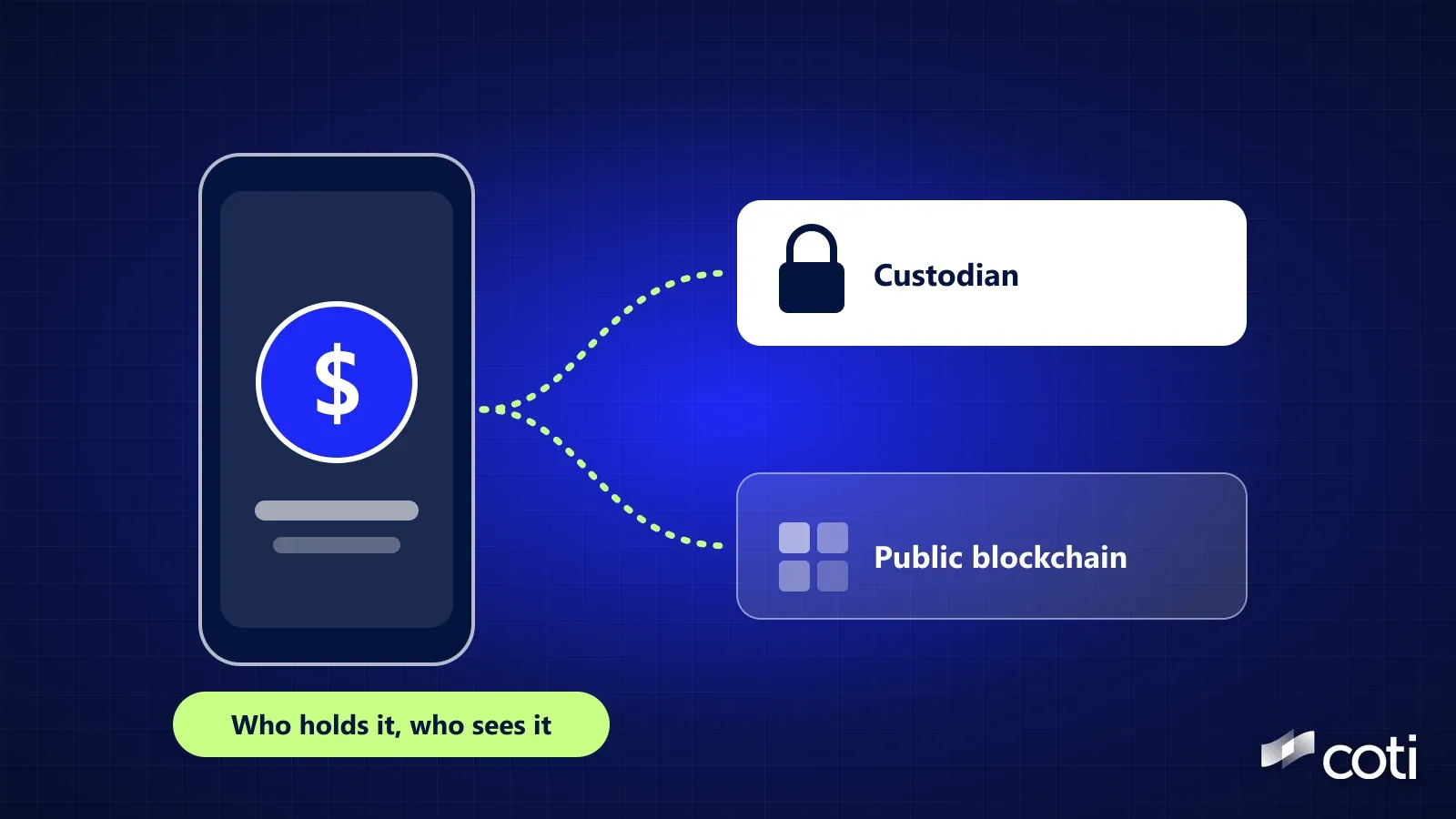
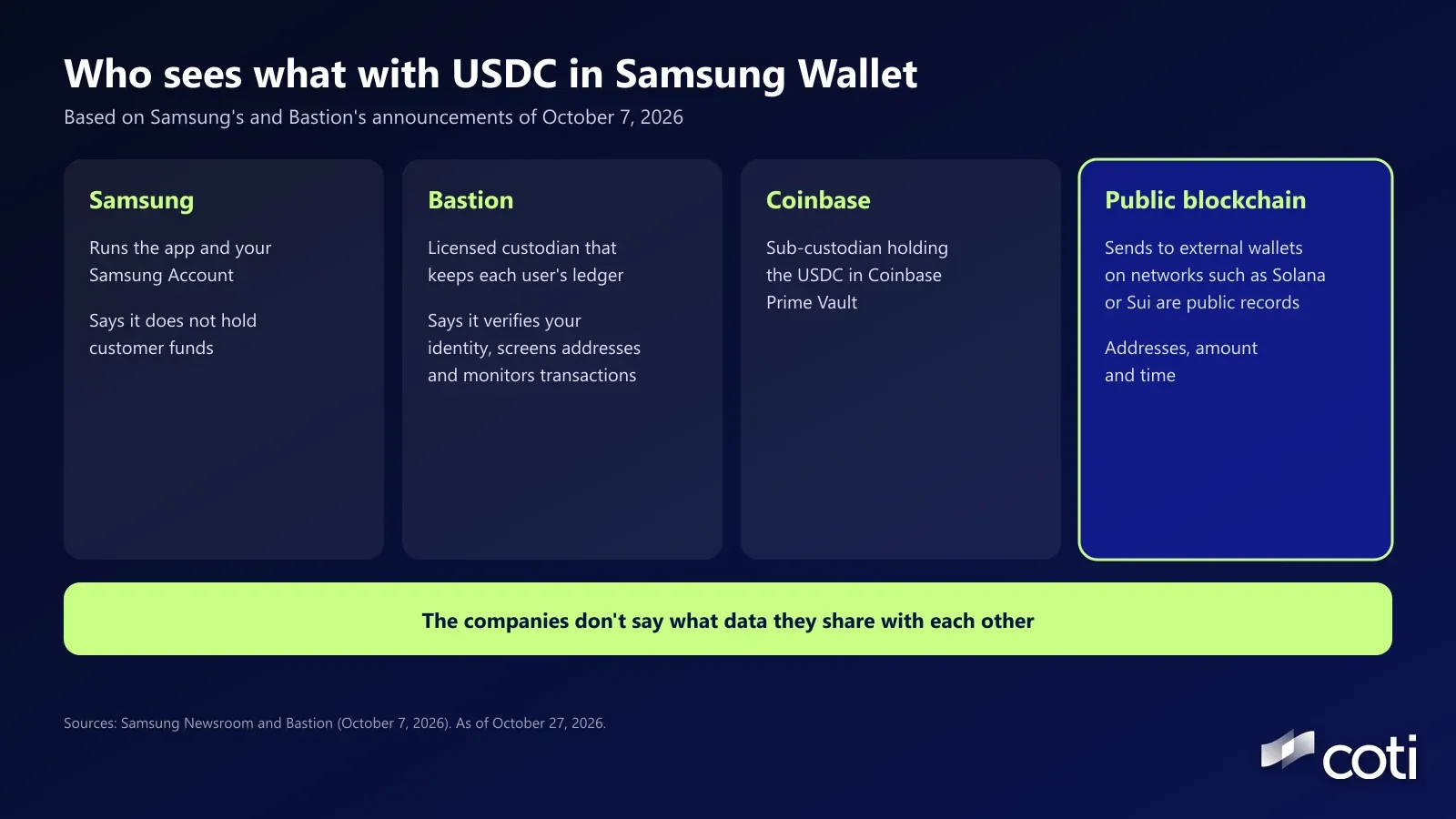
Not Samsung. Its announcement says Samsung "is not a bank, money transmitter, or digital asset custodian and does not hold customer funds." Bastion, which Samsung describes as a licensed stablecoin custodian and infrastructure provider, powers the payment framework, and Bastion has partnered with Coinbase as its sub-custodian, holding USDC in Coinbase Prime Vault.
Bastion's own announcement adds that it keeps the ledger for each user's balance, executes USDC transfers on blockchain networks, and requires each transfer to come from a registered device and be authorised with the user's biometric authentication.
So this is a custodial service. You'd hold a balance with a provider, much like money in a payment app, rather than coins in a wallet where only you control the keys. Samsung says you can send USDC to compatible third-party crypto wallets, so you could move it to a wallet where you hold the keys, if that wallet supports USDC on a network Samsung Wallet supports. The announcement doesn't say whether you can receive USDC from outside wallets.
What's Visible, and to Whom
Inside the service
- Bastion says it verifies and screens the identity of each user, screens blockchain addresses, and monitors transactions for fraud, money laundering and sanctions exposure
- Your balance is a record in Bastion's ledger, not an entry anyone can browse on a blockchain
- Neither company says what data it shares with Samsung or Coinbase, or what Samsung itself sees
When you send USDC to an external wallet
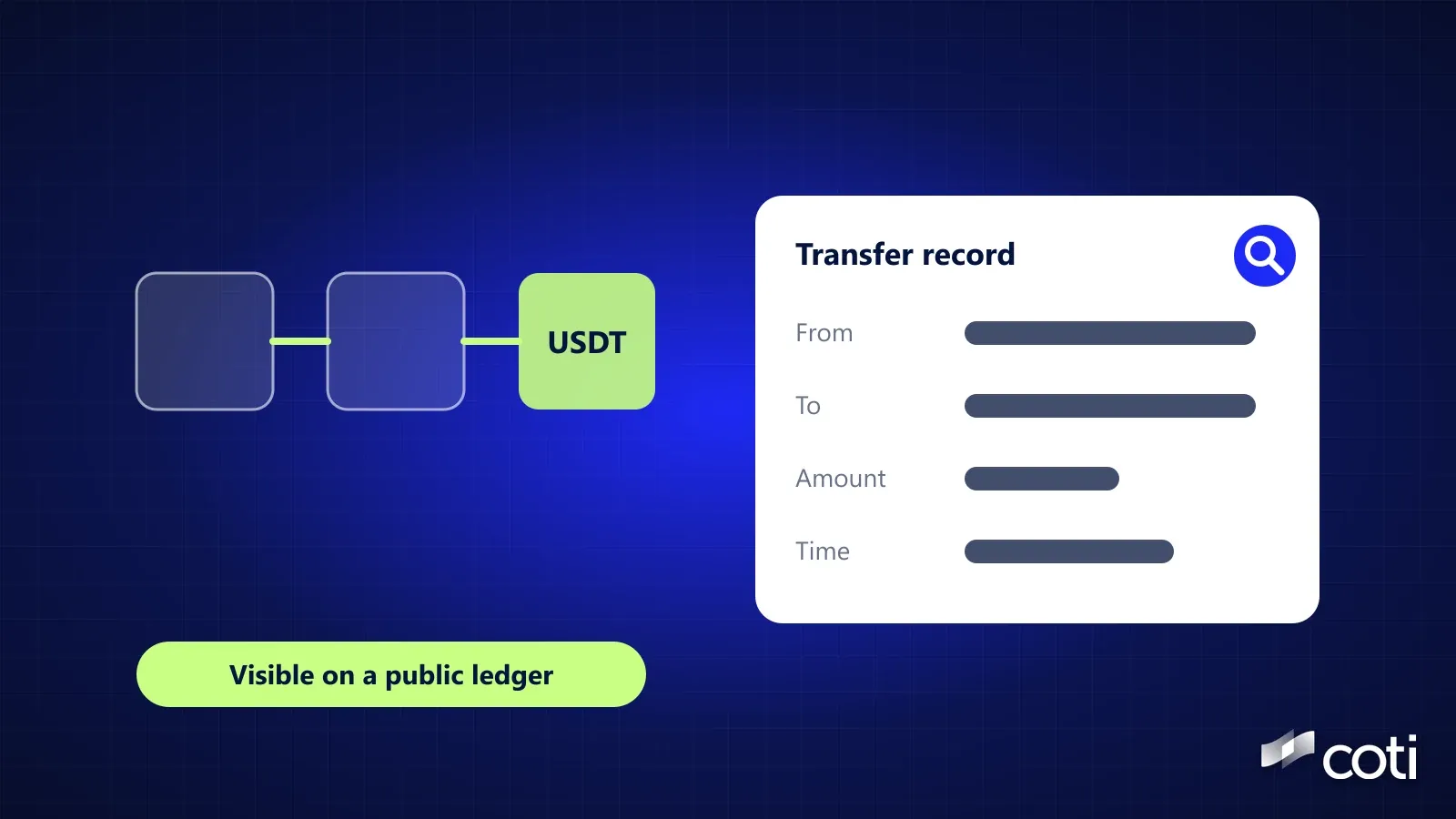
- The transfer moves on a public blockchain that Samsung Wallet supports, such as Solana or Sui. Those are public ledgers, so anyone can look up a transfer on a block explorer, including the addresses, amount and time. Our stablecoin privacy guide explains the same for USDC on Ethereum
- Samsung's announcement doesn't say whether each user gets their own on-chain address or sends from a shared one
When you send to a bank account
- Bastion says it converts the USDC and routes each payout through its network of local regulated partners, so those partners and the receiving bank see the payment too
When you receive it at an exchange
- The exchange sees the deposit, and it knows who its own customer is. It can link the incoming transfer to that account
The issuer
- Circle, which issues USDC, can block addresses from sending or receiving USDC, and its USDC terms, updated October 15, 2026, say it may freeze USDC under a valid legal order
Our take: this looks less like a crypto wallet and more like a payment app that settles in USDC. It's a similar trade-off to HSBC's RedCoin on custody and identity. The difference is that Samsung users can send USDC out to public blockchains, while RedCoin stays inside HSBC's apps on HSBC's own network.
What Samsung Hasn't Said Yet
As of October 27, 2026, the announcement doesn't cover:
- The exact launch date for each user
- What data Samsung, Bastion and Coinbase share with each other, and what Samsung itself sees
- Whether you can receive USDC from outside wallets
- Whether users get their own blockchain addresses
- Which network carries a given transfer
- A full fee schedule for bank transfers
What It Means for COTI Users
Samsung's announcement doesn't involve COTI. It shows how mainstream stablecoin payments are taking shape: custodial, identity-verified, and public whenever coins move on-chain. COTI's approach targets that last part. COTI says its Privacy Portal has been live on Avalanche C-Chain with private AVAX and USDC since September 16, 2026. COTI's Privacy-on-Demand documentation says it keeps values such as amounts encrypted, while metadata like timing, gas and which contract was called can still leak. Moving tokens into or out of the Portal is an ordinary public transfer. It's a different design from Samsung's, and neither hides activity from everyone.
Frequently Asked Questions
Is Samsung Wallet USDC live?
Samsung said it would roll out starting in the last week of October 2026 for eligible US users. We hadn't seen a confirmation that it was live as of October 27, 2026.
Who can use USDC in Samsung Wallet?
Samsung says eligible US residents aged 18 or over with a Samsung Account, on compatible Galaxy devices running Android 13 or later, after identity verification and biometric setup.
Does Samsung hold my USDC?
No. Samsung says it doesn't hold customer funds. Bastion is the custodian, and Coinbase is its sub-custodian.
Can I send USDC from Samsung Wallet to another wallet?
Samsung says you can send USDC to compatible third-party wallets or exchange accounts that support USDC on a supported network, and that Samsung doesn't charge for those transfers.
Are Samsung Wallet USDC transfers private?
Not on-chain. Transfers to external wallets move on public blockchains, where addresses, amounts and times can be seen. Bastion also says it verifies each user's identity and monitors transactions.
Where to Go From Here
If you plan to use it, read the in-app terms when it arrives, especially on custody, fees and data sharing. To see what COTI's privacy technology keeps encrypted, and what can still leak, start with COTI's Privacy-on-Demand overview.
Details checked October 27, 2026. Samsung's plans and terms can change before and after launch. Samsung, Solana, Sui, Bastion, Coinbase and Circle are cited for reference only and aren't affiliated with COTI. Nothing here is financial or legal advice. COTI will never ask for your seed phrase or private key, and only COTI's official channels (coti.io, docs.coti.io, COTI's Medium blog and its official X and Telegram) carry announcements.
Sources
- Samsung Wallet to Bring Stablecoin Access to Eligible Galaxy Users in the US, Samsung Newsroom, published October 7, 2026, accessed October 27, 2026
- Bastion Selected as One of Samsung Wallet's Stablecoin Partners, Bastion, published October 7, 2026, accessed October 27, 2026
- USDC Terms, Circle, last updated October 15, 2026, accessed October 27, 2026
- Samsung Partners with Solana to Natively Deliver Stablecoins in Samsung Wallet to 82 Million U.S. Galaxy Devices, Solana, published October 7, 2026, accessed October 27, 2026
- COTI x Avalanche: Privacy Built for Business, COTI, published September 16, 2026, accessed October 27, 2026
- What is Privacy on Demand?, COTI documentation, accessed October 27, 2026