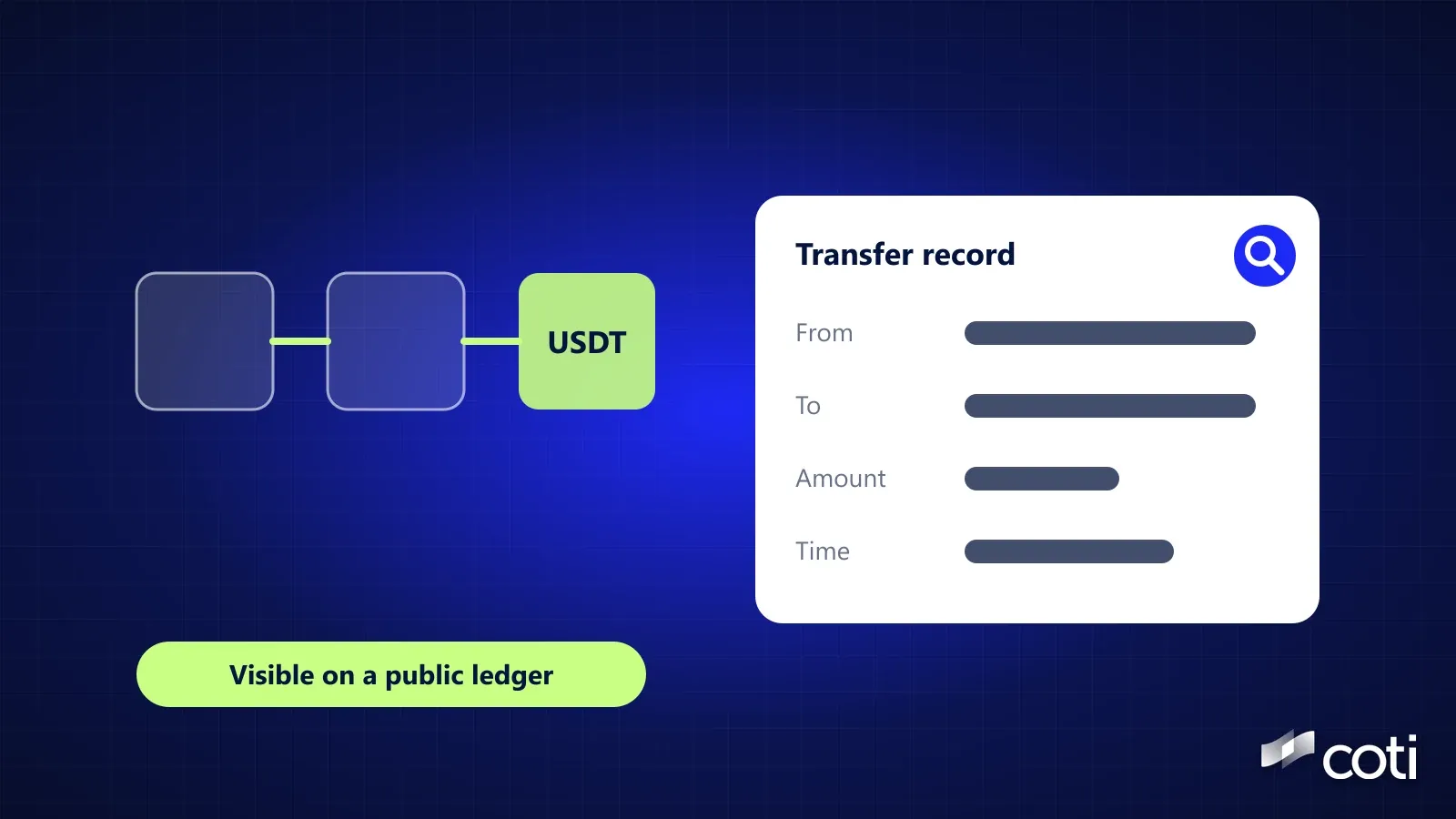
Is it safe to share my wallet address? For receiving crypto, yes: nobody can move your funds with your address alone, because moving funds needs your private key's signature, or an approval you've already signed. But a shared address isn't private. Anyone who has it can see the wallet's balance and full history, and it can bring you scam tokens and look-alike addresses. This guide covers what someone can and can't do with your address, and how to share it safely in the situations where people usually ask.
Current as of October 25, 2026.
The Short Answer
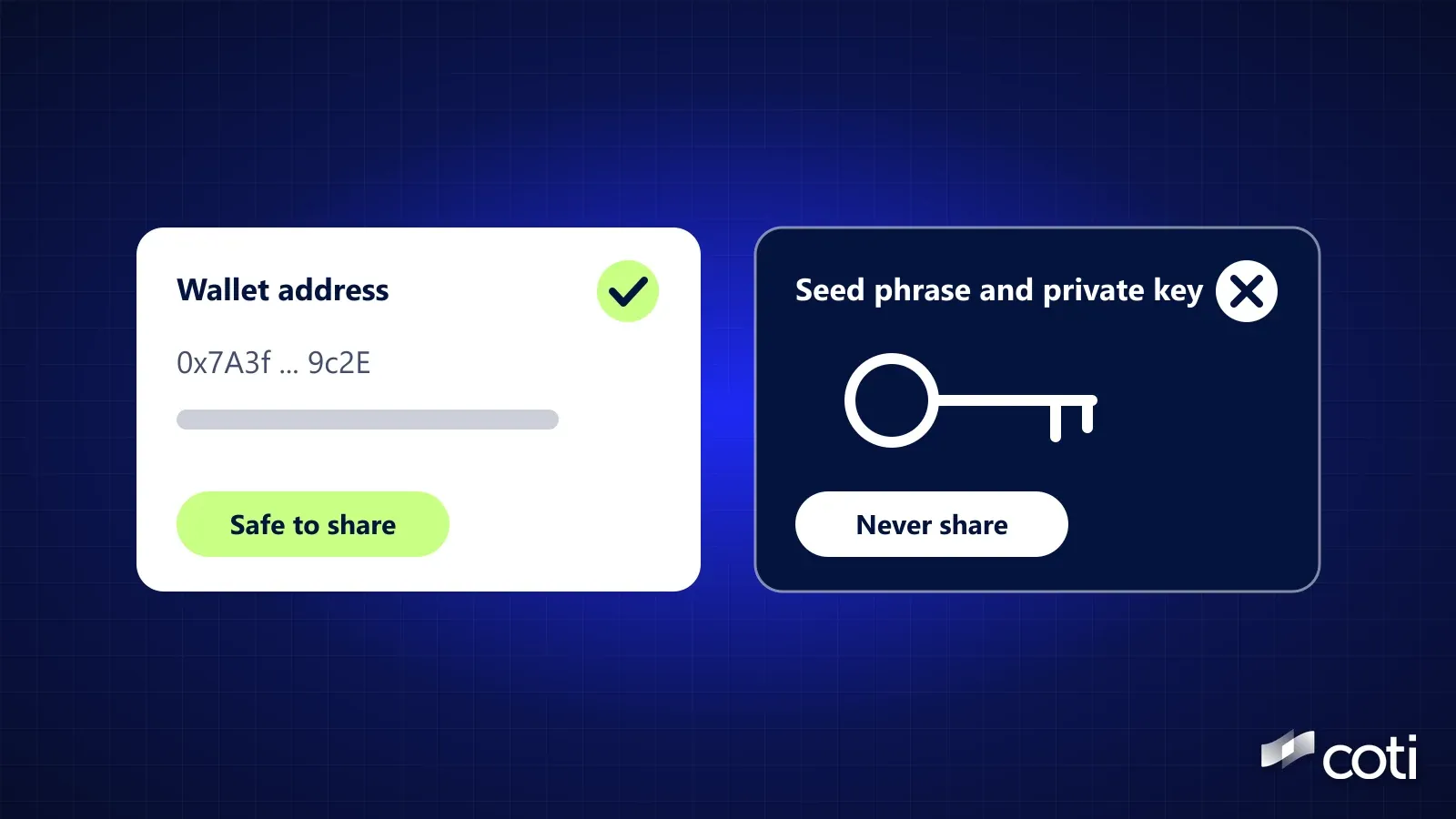
Safe to share
- Your wallet address, the string you give someone so they can send you crypto (on Ethereum it starts with 0x)
Never share
- Your seed phrase (also called a recovery phrase), your private key or your two-factor codes. No genuine support team, moderator or helper will ever ask you to send them or read them out
What sharing reveals
- The address's balance, every past and future transaction, and every other address it has dealt with
Coinbase's help centre puts the first point plainly: "It is not possible to steal digital currency with a public address alone." The catch is the third point. On a public blockchain your address works like an account number that anyone can look up.
Address, Private Key and Seed Phrase: What's the Difference?
Wallet address
- What it is: a public identifier derived from your public key, per ethereum.org's accounts page
- Who needs it: anyone sending you crypto
- Risk if shared: privacy, not theft
Private key
- What it is: the secret that signs transactions. Ethereum.org says a private key can't be derived from a public key, and the address is a hash of the public key
- Who needs it: only you, or the wallet app on your own device
- Risk if shared: anyone who has it can move your funds
Seed phrase (recovery phrase)
- What it is: the list of words that can restore every account created from it
- Who needs it: only you, written down offline
- Risk if shared: total loss. MetaMask's safety tips say anyone with it can control your assets, and to never share it with anyone, including MetaMask
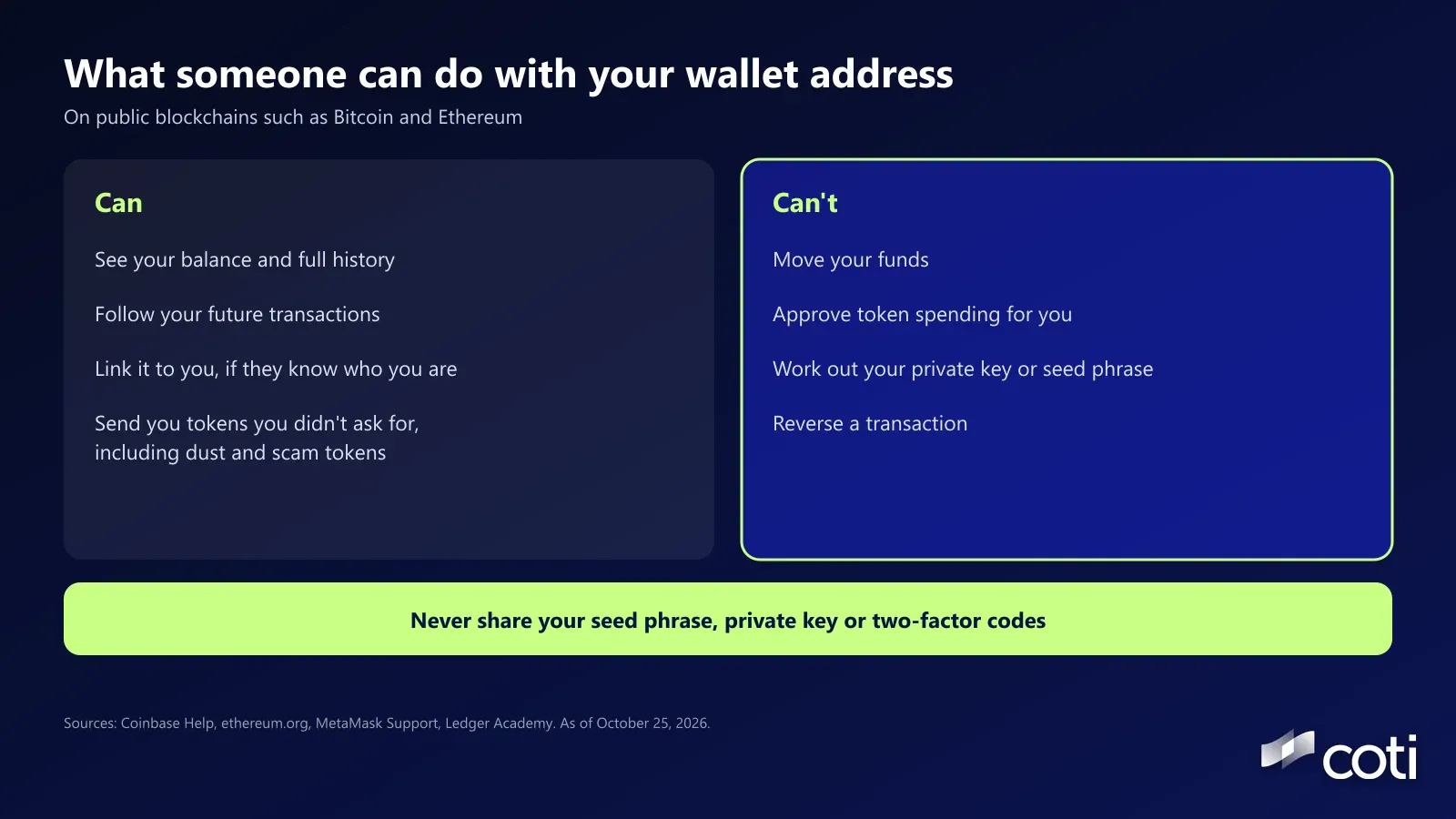
What Someone Can Do With Your Wallet Address
- See your balance and history. On public chains like Bitcoin and Ethereum, anyone can paste an address into a block explorer and see what it holds and every transaction it has made. Coinbase's wallet help page warns that sharing an address reveals all your past and future transactions, and recommends against posting it publicly.
- Watch what you do next. The history keeps growing, so whoever has the address can follow your future activity too.
- Connect it to you. If they already know who you are, your name is now attached to everything the address has done. Our guide to whether anyone can see your crypto wallet explains the other ways an address gets linked to a person.
- Send you things you didn't ask for. Anyone can send tokens to any address. That includes tiny amounts known as dust, worthless scam tokens and transfers from look-alike addresses (more on these below).
What Someone Can't Do With It
- Move your funds. That needs a signature from your private key.
- Approve spending on your behalf. Token approvals, which let an app move a token from your wallet, also need your signature.
- Work out your private key or seed phrase. The address is derived one way from your keys and can't be reversed in practice, as long as your wallet generated the key properly.
- Reverse your transactions. Ethereum.org's scams page is blunt: no legitimate service can reverse a blockchain transaction.
The Scams That Start With Your Address
Your address can't be used to take your crypto directly, so scammers use it to get you to make a mistake. The common patterns:
- Dusting. Ledger Academy's glossary describes a dusting attack as sending tiny amounts of crypto to many addresses, then watching how they move to tell which addresses belong to the same person. Ledger adds that, combined with other data such as exchange records, this can help identify the owner. Its advice is to ignore unsolicited small transactions and not to click links or messages that come with them.
- Address poisoning. A scammer sends a transaction from an address that looks like one you've used, hoping you'll copy the wrong one from your history next time. MetaMask's guidance is not to copy addresses from your transaction history. Our address poisoning guide covers it in detail.
- Scam tokens and fake airdrops. Ethereum.org's guide to scam tokens says scammers airdrop fake tokens to wallets and steer people to their own sites to trick them into signing bad transactions or granting allowances on their tokens. Trezor's support page says to assume an unexpected token is a scam and not to interact with it.
- Fake support. Ethereum.org's scams page says real moderators never message you first, and that legitimate apps never ask for your recovery phrase.
The real theft risk is your signature, not your address. MetaMask's explainer on token approvals notes that requests for essentially unlimited token amounts are how many malicious sites steal. Ethereum.org's security guide recommends reading the transaction message before you sign anything a smart contract asks for.
How to Share Your Address Safely
Getting paid by a client or employer
They'll be able to see the address's balance and history from the moment they have it. A separate receiving address means the payer sees only what you're paid there, not the wallet where you keep savings. Moving funds between your own addresses later links them on-chain, so that only helps until the funds move. This limits what payers and strangers can piece together. It doesn't change what an exchange or other provider that verified your identity already knows.
- On Bitcoin: bitcoin.org's privacy page says: "you should use a new Bitcoin address each time you receive a new payment." Many Bitcoin wallets generate a fresh receive address for each payment.
- On Ethereum and similar networks: an account keeps the same address, so the equivalent is a separate account. MetaMask's help centre explains how to add accounts. Two trade-offs: accounts in one wallet share its seed phrase, and a new account needs ETH for fees, so funding it from your main account links the two on-chain.
Receiving from a friend
This is the lowest-risk case: someone you know learns what that address holds. If you'd rather they didn't see your other activity, use a separate account for it.
Posting it publicly for tips or donations
It's safe from theft, but it's public permanently, to everyone. Use an address dedicated to donations, and expect dust and scam tokens to arrive. Anyone who knows an ENS name such as yourname.eth can look up the address it points to. If you also set it as your address's primary name, ENS's documentation calls that a bi-directional link, so apps can show the name wherever the address appears.
Giving it to an app or exchange
The service learns the address, and if it knows who you are, it can link the address to your account. Share addresses only with services you trust, as Coinbase's wallet help page also advises.
Before you send to an address someone shared with you
Check the whole address, not just the first and last few characters. Use a saved contact for addresses you pay often, check an address carefully before you save it, and never copy one from your transaction history.
Already shared or posted your address?
You can't take it back, but you can limit what comes next:
- Use a fresh address or account for future payments.
- Don't move funds straight from the exposed address to your main wallet, since that links them on-chain.
- Ignore tokens you didn't expect, and don't click links that come with them.
- Check which apps you've given token approvals to, and revoke ones you no longer use.
- Look up the address on a block explorer yourself, so you know exactly what others can see.
Where COTI Fits
Everything above is about public chains, where balances and amounts are visible to anyone. COTI's privacy technology changes the amount part, not the address part.
On COTI's own network, the Privacy Portal documentation says balances and transfer amounts of private tokens stay encrypted on-chain and are decrypted locally in the holder's browser. The docs list mainnet contract addresses for it, as of October 25, 2026. Separately, COTI says a cross-chain version of the Portal, built on its Privacy-on-Demand technology, has been live on Avalanche C-Chain with private AVAX and USDC since September 16, 2026. COTI's developer docs still describe Privacy-on-Demand as under active development, as of October 25, 2026.
What it doesn't change: COTI's private token contract records sender and recipient addresses in plain form, and converting tokens starts with an ordinary token approval and a public transfer. So sharing an address that holds private tokens still shows when it transacts, who it transacts with, which contracts it uses, any public balances and the amounts moved into or out of the Portal. What it hides is the private token balance and the amounts of private transfers.
Frequently Asked Questions
Can someone steal my crypto with my wallet address?
No. Moving funds requires a signature from your private key, and the address can't be used to work out the key. Theft happens when someone gets your seed phrase or private key, tricks you into signing a malicious transaction or token approval, or uses an old unlimited approval you granted.
Can someone hack my wallet with my address?
Not with the address alone. What an address does give a scammer is a target: they can send you scam tokens or poisoned look-alike addresses and wait for you to interact.
Is it safe to share my Bitcoin address?
For receiving, yes. For privacy, bitcoin.org recommends a new address for each payment, because reusing one lets anyone connect all the payments it receives.
Should I put my wallet address on social media?
Only one you're comfortable making public forever, ideally used only for that purpose. A public post links the address, and everything it ever does, to your profile.
Can someone find my name from my wallet address?
Not from the address itself, but other information can link it to you. Our guide to who can see your crypto wallet explains how.
Where to Go From Here
Treat a wallet address like an account number that anyone can look up: share it on purpose, use separate addresses for separate parts of your life, and never share your seed phrase. To see how COTI keeps balances and amounts encrypted on its own network, start with the Privacy Portal documentation.
Details checked October 25, 2026. Coinbase, MetaMask, Ledger, Trezor and ENS are cited for reference only and aren't affiliated with COTI. Wallet features and scam patterns change. Nothing here is financial or legal advice. COTI will never ask for your seed phrase or private key, and only COTI's official channels (coti.io, docs.coti.io, COTI's Medium blog and its official X and Telegram) carry announcements.
Sources
- Is a crypto address linked to my Coinbase account safe to display publicly?, Coinbase Help, accessed October 25, 2026
- Tax reporting (sharing your wallet address), Coinbase Wallet Help, accessed October 25, 2026
- Ethereum accounts, ethereum.org, accessed October 25, 2026
- Ethereum security and scam prevention, ethereum.org, accessed October 25, 2026
- Scams, ethereum.org, accessed October 25, 2026
- How to identify scam tokens, ethereum.org, accessed October 25, 2026
- Protect your privacy, bitcoin.org, accessed October 25, 2026
- Basic safety and security tips for MetaMask, MetaMask Support, accessed October 25, 2026
- What is a token approval?, MetaMask Support, accessed October 25, 2026
- Address poisoning scams, MetaMask Support, accessed October 25, 2026
- How to add accounts in MetaMask, MetaMask Support, accessed October 25, 2026
- Dusting attack, Ledger Academy, accessed October 25, 2026
- Dusting attacks and airdrop scam tokens, Trezor Support, accessed October 25, 2026
- Primary names, ENS documentation, accessed October 25, 2026
- COTI Privacy Portal, COTI documentation, accessed October 25, 2026
- Private ERC20 (contracts library), COTI documentation, accessed October 25, 2026
- Privacy on Demand, COTI documentation, accessed October 25, 2026
- COTI x Avalanche: Privacy Built for Business, COTI, published September 16, 2026, accessed October 25, 2026